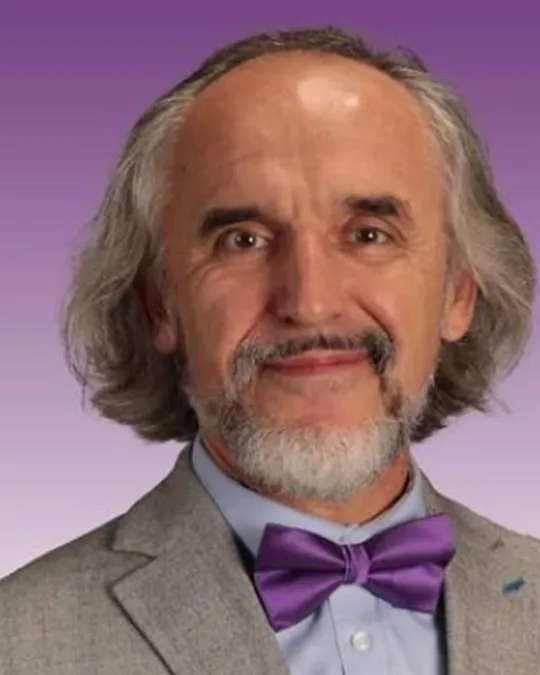
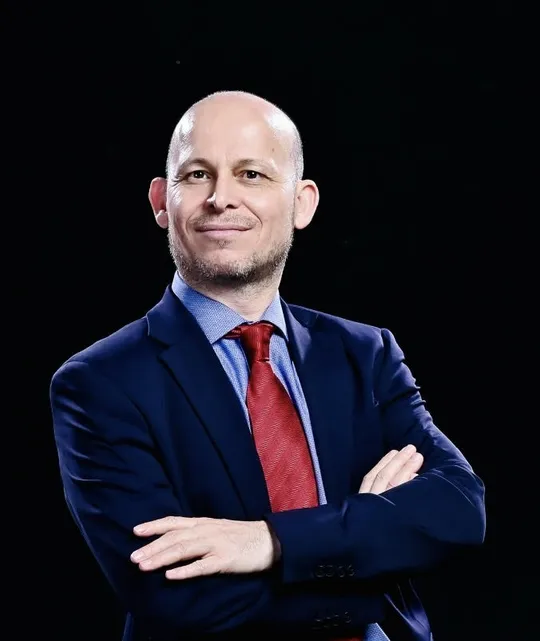
Portrait of Franck Peinaud

Mental health, crisis and recovery

ColonelFranck Peinaud

Mental health and security researcher at the French Gendarmerie Research Centre, Mental Health First Aid instructor

  • Mental health
  • Mental health first aid
  • Recovery
  • Crisis intervention
  • Stigma
  • Mental health and security
Short address psynumia.com/peinaud
  • PSSM
    accredited Mental Health First Aid instructor
  • 13 M
    people in France live with a mental disorder
  • 100 %
    of author’s royalties donated to UNAFAM
01

Biography

Franck Peinaud is an accredited Mental Health First Aid instructor (PSSM France) and a researcher at the French Gendarmerie Research Centre (CRGN), which he represents at the École militaire in Paris. A Gendarmerie Colonel with a PhD in contemporary history from the University of Bordeaux, he focuses his research on where mental health and security meet: recognising psychological distress, intervening with people in crisis, protecting those who intervene and ensuring continuity of care.

In Santé mentale : un défi français. Comprendre, aider et se rétablir (Mental Health, a French Challenge: Understanding, Helping and Recovering, Éditions de la Dame Blanche, 2026), he gives a voice to people with lived experience, their relatives, clinicians, and leaders of associations and institutions to shed light on prevention, the fight against stigma, users’ rights and recovery. He donates all his author’s royalties to UNAFAM. He also coordinated the collective volume Exister dans la fragilité (Living with Fragility, Ovadia, 2025), on psychological trauma, burnout, addiction and end of life.

A volunteer with the Order of Malta, he draws on long operational and international experience, including six years with the European Union Delegation in Tunis, to think about institutions that protect people without reducing them to their crisis.

02

Interview

Psynumia asks

In Santé mentale : un défi français. Comprendre, aider et se rétablir (Mental Health, a French Challenge: Understanding, Helping and Recovering, Éditions de la Dame Blanche, 2026), Franck Peinaud starts from a simple observation: mental health concerns society as a whole and cannot be left to specialists alone. Through interviews and testimonies, he brings together the perspectives of people with lived experience, relatives, clinicians, and leaders of associations and institutions to shed light on prevention, support, users’ rights, stigma and recovery. With a foreword by Sandra Bertezène, professor at the Conservatoire national des arts et métiers, and an afterword by Christian Hervé, emeritus professor and a leading figure in medical ethics, the book’s royalties go in full to UNAFAM, the French national union of families and friends of people with mental illness or psychological disabilities. Psynumia asked him about mental health crises, prevention and recovery, where mental health meets security.

  1. How can security and mental health be reconciled without confusing psychological distress with dangerousness, while protecting both people and those who intervene?

    Mental health and security often meet in crisis situations: suicide risk, domestic violence, psychological distress or the need to protect someone. But approaching these situations solely from the angle of danger would be a mistake. We need to start from the situation as it is lived, the person’s needs and the real risks, without equating mental disorder with dangerousness.

    People living with mental disorders are also particularly exposed to certain forms of violence. Protection must therefore take into account their vulnerability and the risks they themselves face, without denying that some situations may pose a danger to others.

    Security aims to prevent or stop an immediate danger. Care is the responsibility of health professionals, while social support must address difficulties over time. These interventions are complementary, but none should replace the others.

    Law enforcement may be the first to encounter a person in crisis. Officers need reference points to understand the situation, assess the risks and respond proportionately. But they cannot carry the response alone. Protecting the person also means protecting those who intervene, by giving them access to appropriate training and to effective health and social services to hand over to.

  2. How does first-hand knowledge of the field help us better understand the issues of security and mental health?

    My career has placed me both in operational roles and in research. This position as a participant observer makes it possible to understand actual practices, the constraints professionals face and the gaps between stated objectives and the situations encountered.

    In particular, it helps identify difficulties that official documents miss: misunderstandings, institutional habits and the limits of existing systems. In the field of mental health, this knowledge of the ground helps us better understand what is at stake during an intervention and what professionals need in order to act with discernment.

    This proximity, however, demands a critical eye. One must be able to question the practices of one’s own institution as much as those of one’s partners. Understanding the constraints on those who intervene does not mean giving up on assessing their decisions, any more than defending people’s rights means ignoring the difficulties encountered on the ground.

  3. How can institutions better protect vulnerable people and professionals without placing the entire burden on their individual ability to cope?

    Fragility is part of the human condition, but the resources for getting through hardship are unevenly distributed. Precarity, isolation and difficulties in accessing care can worsen psychological distress and tensions. We must therefore examine not only individual difficulties, but also the conditions in which they arise and how institutions respond to them.

    The same applies to security professionals, clinicians and social workers. Their ability to cope cannot depend solely on their personal resilience. In the Gendarmerie, a culture in which expressing distress may be seen as weakness is an obstacle to seeking help. Conversely, lessons-learned reviews, the quality of relationships within teams and the attentiveness of managers make it easier to spot difficulties and to direct those affected towards support.

    When the same problem recurs among several people working in a similar organisation, the way the group functions must also be questioned. Resilience should not be a demand placed on each individual, but a capacity supported by the institution.

    A protective organisation is therefore one in which people can report a difficulty without fear, ask for help and receive an appropriate response. This psychological safety benefits those who intervene as much as the people they support.

  4. How can we respect the voice of a person in crisis while ensuring their safety and that of professionals?

    The difficulty sometimes lies in reconciling several views of what protects the person: their own, their relatives’ and the professionals’. But the service user’s participation must not disappear as soon as a disagreement arises.

    Difficulties can begin in ordinary situations, for example when someone asks to change a treatment and does not feel heard. Acknowledging their experience and discussing possible solutions with them helps maintain a relationship of trust.

    When the crisis impairs their capacity for judgement or safety is seriously at risk, a more restrictive intervention may be necessary within the legal framework. It must nevertheless remain proportionate and not become automatic. Even in these circumstances, it is important to seek out the person’s preferences and to keep the dialogue going as far as possible.

    Preparing decisions in advance, particularly through preferences expressed before a crisis and the involvement of a trusted person, can make interventions easier. Professionals must be able to protect without reducing the person to their crisis. Respecting the service user’s voice, for its part, does not exempt institutions from taking risks seriously or from guaranteeing the safety of those who intervene.

  5. How can mental health prevention be developed without leaving relatives, colleagues and those who intervene alone in the face of distress?

    Mental Health First Aid teaches people to recognise distress, approach someone, listen without judging and direct them to a professional. It is a first response, not therapeutic care.

    The problem arises when the person who raises the alarm finds no one to hand over to. Training can then pass on reference points, but also leave participants helpless in the face of a situation beyond their skills. This risk affects relatives, colleagues, frontline professionals and law enforcement.

    We must therefore distinguish between recognising distress and being responsible for responding to it over time. No one should be forced to become the carer or point of contact for a person in difficulty simply because they have been trained or happen to be present at the moment of crisis.

    Prevention must rest on real possibilities for referral and care. In particular, we should better identify the situations in which alerts go unanswered. When someone who intervenes cannot find a solution, it does not necessarily mean they have failed: it may reveal a shortcoming in the system.

    The safety of people and of those who intervene thus rests on collective responsibility, with clearly defined roles and accessible services to hand over to.

  6. What do crises teach us about the flaws in our mental health system and about the conditions for an intervention that feels safe?

    Too often, people still enter psychiatric care at the moment of crisis. For families, the crisis may be the culmination of warnings that went unanswered. For clinicians, it may require immediate intervention despite a lack of resources. For the people concerned, it can become an experience of losing control, especially when they feel passed from one professional to another without being able to make themselves heard.

    Pablo’s story, told in my book, illustrates the difference. His first hospitalisation, imposed by those around him, was experienced as a time when he could not make himself heard. A second hospitalisation, which he requested himself and which involved more dialogue and freedom of movement, helped him begin to rebuild his life.

    These experiences show that safety is not measured only by the ability to end a crisis. It also depends on how the intervention is carried out, on continuity of care and on the person’s ability to regain a say in the decisions that concern them.

    For professionals, intermediate solutions, adequately staffed teams and clear procedures can prevent a crisis from turning into a confrontation or a break in care. For individuals, a respectful welcome and an appropriate response can foster trust and access to care.

    An effective policy must therefore act before, during and after the crisis: heed early warnings, organise proportionate interventions and ensure continuity of support.

  7. How should a mental health policy be evaluated, taking into account people’s sense of safety and the working conditions of those who intervene?

    Recovery does not necessarily mean that symptoms disappear. It also means being able to regain control over one’s life, to have choices again, to pursue plans and to maintain social ties.

    The evaluation of public policy therefore cannot be limited to the number of consultations, hospitalisations or interventions carried out. It must also examine the concrete effects on people’s lives: access to rights, housing, continuity of care, quality of relationships and the ability to move towards the goals they have set themselves.

    This evaluation should also take better account of the experience of safety. Did the person feel listened to and protected? Did they understand the decisions taken? Were they able to express their preferences and retain as much agency as possible? Were alerts followed by an appropriate response?

    At the same time, we need to look at the conditions in which those who intervene carry out their duties. Have they received appropriate training? Do they have clear procedures, support from their superiors and accessible health or social services to hand over to? Can teams share their difficulties and learn from interventions?

    Finally, it is important to measure the breaks in care that were avoided, the referrals that went unanswered, the hospitalisations that could have been avoided and the conditions for better continuity of support.

    A mental health policy works when it tangibly improves people’s lives while giving professionals the means to intervene in appropriate conditions. Safety is then reduced neither to the absence of incidents nor to control of a situation: it is also measured by trust, respect for rights, the quality of responses and our collective capacity to prevent crises.

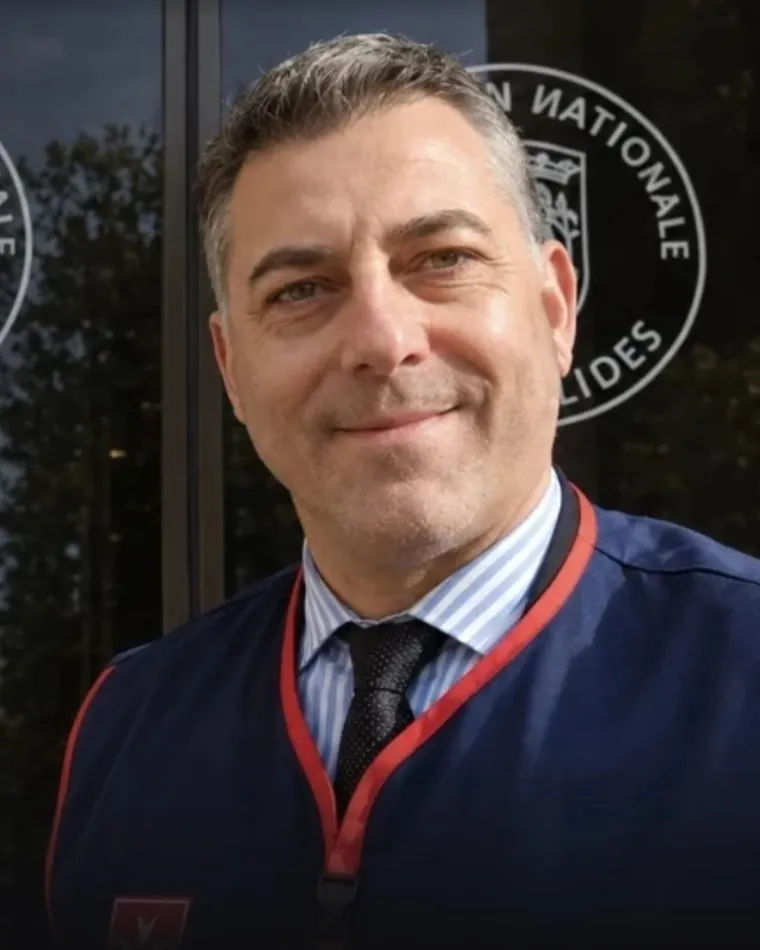
03

Publications

Santé mentale, un défi français, Éditions de la Dame Blanche
Book

Santé mentale, un défi français

Comprendre, aider et se rétablir
Éditions de la Dame Blanche · September 1, 2026 · 280 pages · ISBN 978-2-9597401-1-4

More than 13 million people in France live with a mental disorder, supported day to day by more than 3.5 million relatives. Through new interviews with service users and their families, institutional and association leaders, hospital directors and clinicians, the author brings these voices together to offer concrete answers, inform and intervene early, fight stigma and build a therapeutic alliance based on trust.

Exister dans la fragilité, Les éditions Ovadia
Book

Exister dans la fragilité

Les éditions Ovadia · June 15, 2025 · 316 pages · ISBN 978-2-36392-670-8

A collective volume coordinated by Franck Peinaud (Philosophy and Ethics of the Smart City series). Rather than a deficit, fragility is seen as the sensitive core of our individual and collective lives, through psychological trauma, burnout, addiction, end of life and our relationship with technology, as well as the tensions running through health and social care institutions.

Article· Published in Cercle K2

Santé mentale, un défi français : entretien avec Franck Peinaud

September 7, 2026

The author explains why he approaches mental health as a societal issue that goes beyond healthcare, and presents the aims of his book, which centres on people’s lived experience and on recovery.